Bioluminescence
Some organisms glow in the dark. This process is called bioluminescence. Examples include fireflies, algae, bacteria, mushrooms and fish. The light can serve different purposes, such as attracting a mate, luring prey, or even acting as a kind of burglar alarm.
Glowing organisms
Bioluminescence occurs in many different organisms. It comes in many different colours and serves many different purposes.
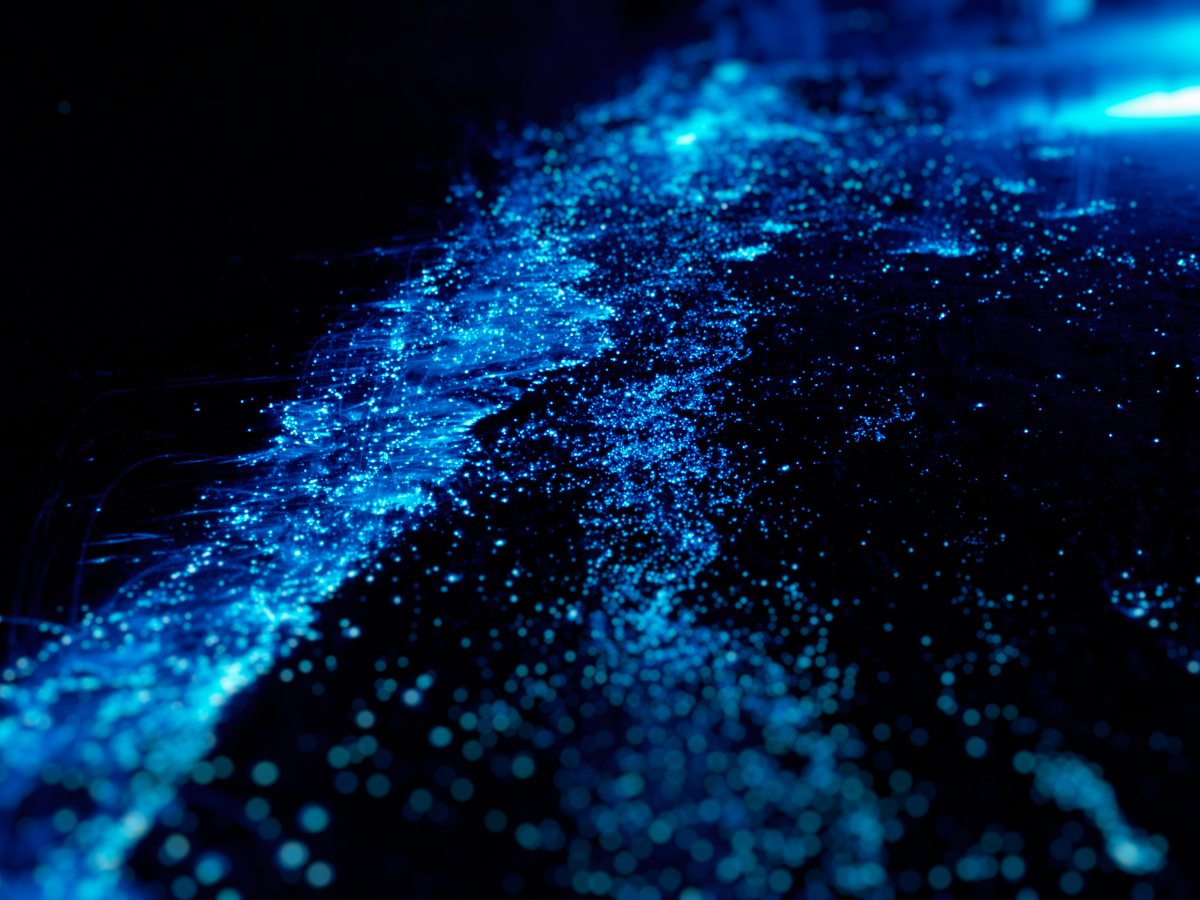
In the sea
In summer, glowing algae put on a beautiful light show in the surf. But there are also fish in the deep sea that produce light.
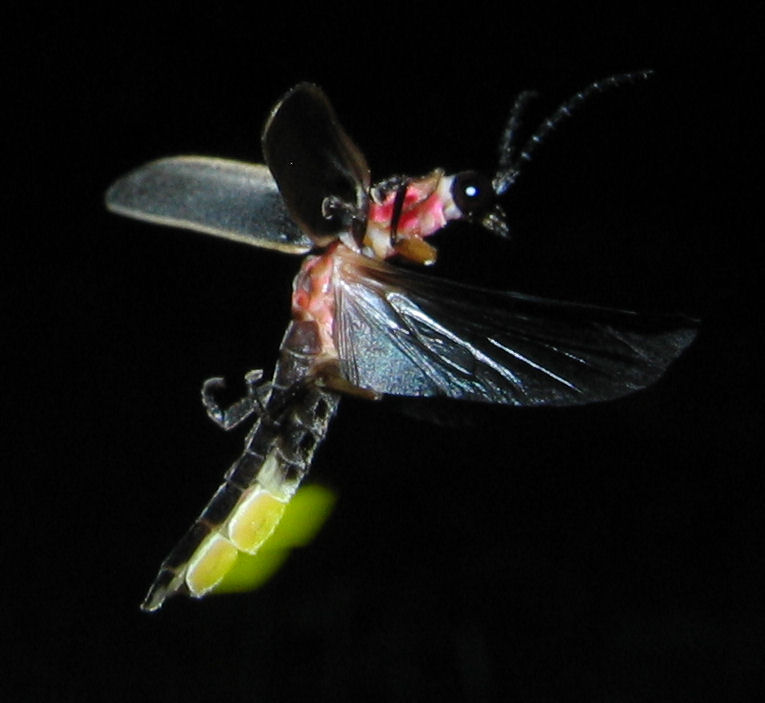
In the air
Fireflies produce light in the rear part of their body. Males and females find each other with short flashes: each species has its own flashing pattern.
Photo: Art Farmer, CC BY-SA 2.0
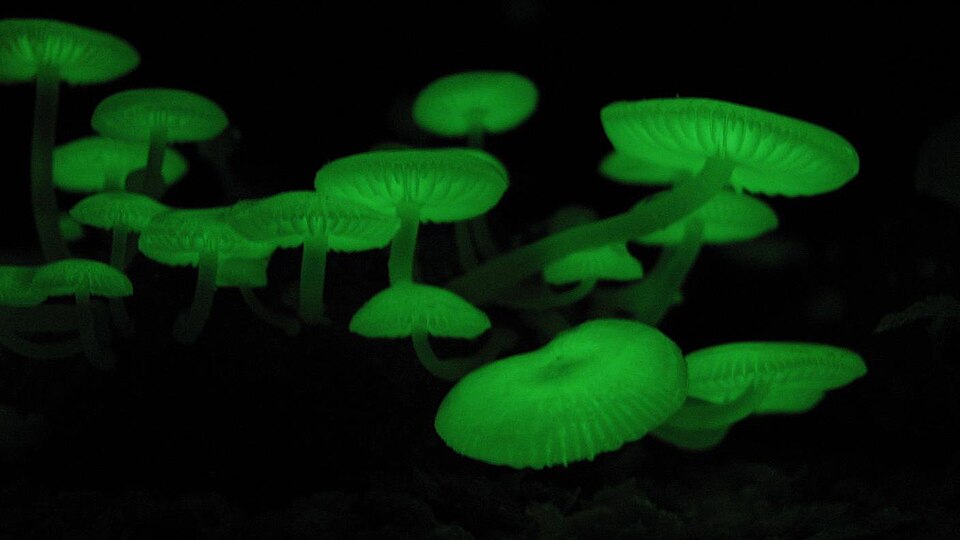
On land
On land, bioluminescence is rarer. Well-known examples are glow-worms, and a few mushrooms that glow a soft green in the forest.
Photo: Anonymous Powered, CC BY-SA 3.0
Algae
Some marine algae give off a brief flash of light when they are moved, for example by a wave or a passing fish. In summer, this can create a beautiful light show in the surf, like in the video below. This phenomenon is called sea sparkle. It occasionally occurs along the North Sea coast too, mainly in the summer months of July and August.
Why do the algae glow?
The reason why algae glow is not fully understood, but the light may act as a kind of burglar alarm. For example, when small shrimp feed on the algae, the movement makes the algae light up. This light can then attract larger predators, which go on to hunt the shrimp. After that, the algae are safe again.
How do the algae glow?
The light is produced by an enzymatic (chemical) reaction inside the cell. A compound called luciferin reacts with oxygen. An enzyme, luciferase, makes this reaction run quickly. The energy released is given off as light instead of heat. In the sea, the light is usually blue or blue-green, because those colours travel furthest through water.
Dinoflagellates
These marine algae are called dinoflagellates. Although they are single-celled organisms, you can still see them with the naked eye: they can grow up to 0.5 mm in size. Like plants, they get their energy from sunlight through photosynthesis. The dinoflagellates sold in this shop belong to the species Pyrocystis lunula. This species is found in the North Sea, among other places.
Their cells contain thousands of tiny light vesicles, called scintillons, in which the luciferin and luciferase are ready and waiting. When the water starts to move, the cell senses this at its cell wall. Within a fraction of a second, the reaction starts and the cell gives off a short blue flash. The harder you shake, the more cells light up at the same time.
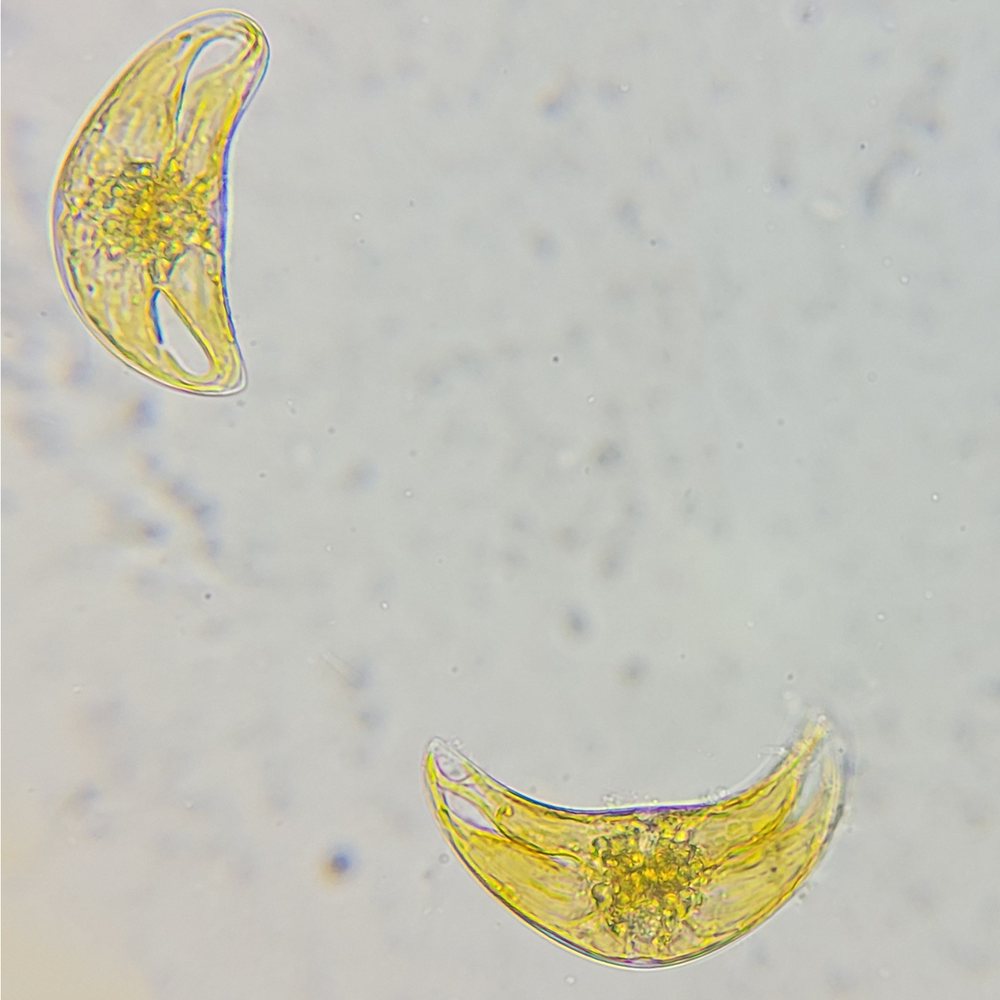
Algae at home
When you order algae from this shop, you receive a bottle of algae in liquid medium. At night, the bottle gives off a bright blue light when you shake it, just like in the video below. The algae have a biological clock: they only glow after sunset. You can read more about this on the Algae care page.
Experiments at home – school projects
Glowing algae are an ideal subject for a school research project, or for experimenting at home. Not all bioluminescent organisms are easy to keep at home, but these algae are a clear exception. In principle, all they need is light and (if you want to keep them alive for more than a few months) a small amount of extra nutrients now and then.
Examples of research you could do for a school project:
- Algae get their energy from light through photosynthesis, just like land plants. What is the effect of light intensity or light duration on the amount of bioluminescence they show the following night?
- Bioluminescent algae only glow at night, and just like humans, they have a biological clock that knows whether it is day or night. At what time of night do they glow the most?
- What effect does changing their day/night rhythm have on their bioluminescence? Can algae get jet lag?
Want to see it for yourself?
With our algae, you can bring this natural phenomenon into your own home. Put the bottle in a bright spot during the day, wait until it is dark in the evening, and shake the bottle in a dark room.
Shop the algae